UNIVERSITY OF FOGGIA HIGHLIGHTS TOOLS AND BEST PRACTICES FOR SUSTAINABLE RURAL DEVELOPMENT
At an annual local event in Foggia, COREnet project manager Fedele Colantuono discusses circular economy, innovative approaches to food waste and agri-food sustainability.
A talk organized by the Municipality of Foggia as part of the initiatives “The new Sustainable City” took place on 24th March 2025 at the “Gate & Gusto Fair” in Foggia, an important annual event for the province dedicated to food, tourism and local agrifood business.
The talk, titled “Circular economy and the fight against food waste: tools and good practices for sustainable rural development”, involved Mariantonietta Fiore and Fedele Colantuono from the Department of Economics of the University of Foggia, together with Gustavo Vassalli (Director of the food bank “Banco Alimentare della Daunia”), Francesco Sansone (Istituto Poligrafico e Zecca dello Stato of Foggia) and Assunta di Matteo (multifunctional farms “Rete Fattorie Sociali”). Over 40 people attended the event, including students, representatives of local institutions, organizations and companies in the area. The whole talk was moderated by the journalist Danila Paradiso.
The representatives of the Department of Economics, after introducing the key concepts of sustainable development for agri-food and the Department’s commitment to a multi-level and multi-actor approach with the various representatives of the territory, shared some of the concrete tools and initiatives in the field, such as the various National and European projects in which they are involved. Starting with the importance of the role of advisors in the Horizon COREnet project and systems for exchanging knowledge and good practices among operators in the local agri-food supply chain (short and zero km supply chains), they then moved on to more concrete examples of innovation. One such example was the use of blockchain in the extra virgin olive oil and wine supply chain (National WeBest project), where Valentina Maria Cianci (Splashmood) presented the new AI tool developed for WeBest, accessible via WhatsApp, which guides producers in using blockchain practically.
The presentation continued by illustrating the role of the Department in preparing training materials that bring students closer to the issues of environmental sustainability in a creative way (Erasmus+ CL4Bio project), towards professional growth with a cultural background linked to the territory, becoming future experts and promoters of local excellence (Erasmus+ ENGINE project).
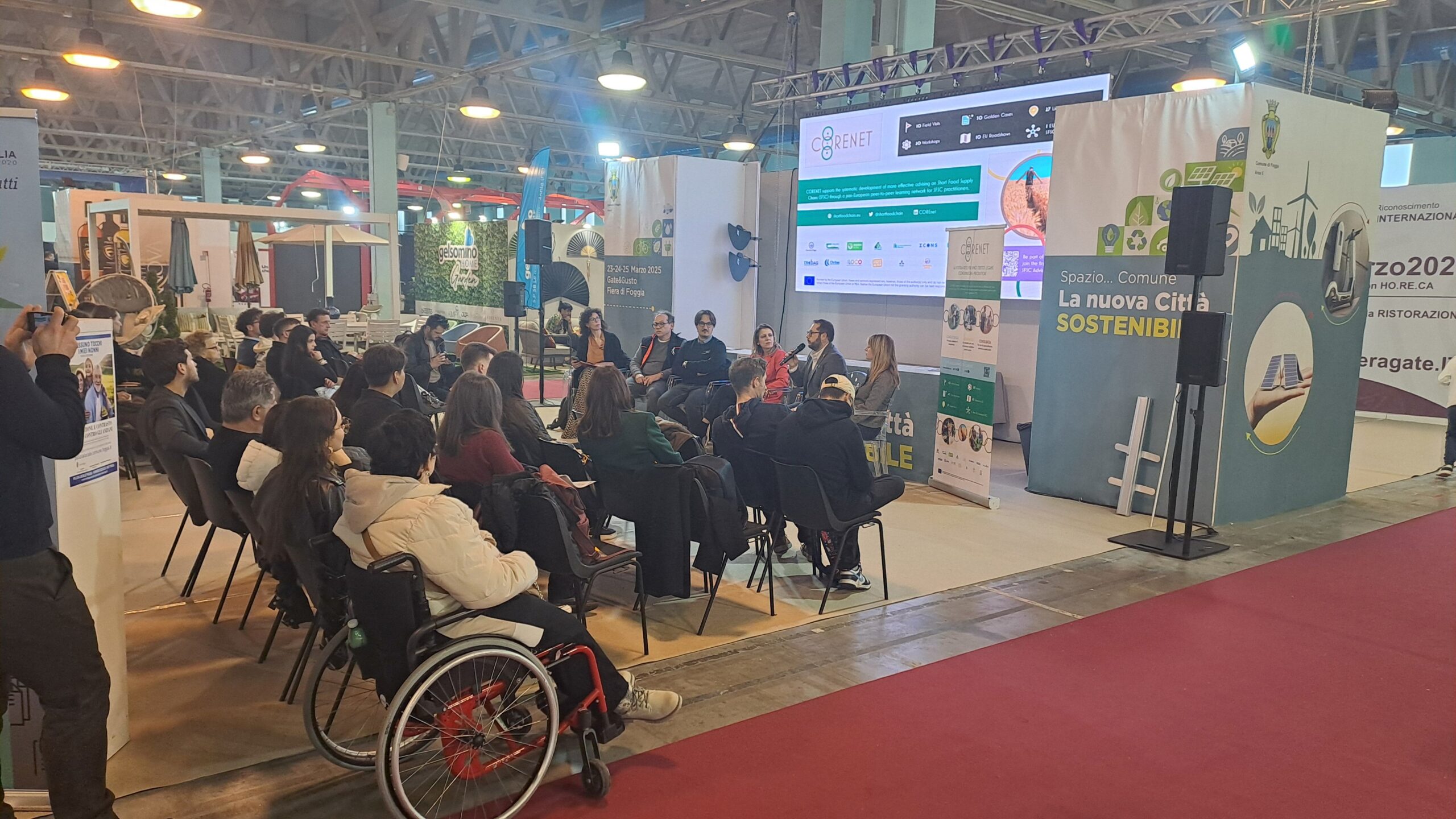
The significance of training and the advisor’s role in agrifood business were enriched by the contributions and testimonies of the other speakers. Through their social commitment, they emphasized the importance of multifunctional agriculture and inclusive social farms in promoting the circular economy, raising social awareness, and engaging in food recovery and donation efforts for those in need. Their work is activating pathways for change in the local community, contributing to the common good with more sustainable and shared models.
Photo credits: Fedele Colantuono