CORENET VISIT TO DUTCH SHORT FOOD CHAIN EXAMPLE: FROM PIONEERING TO MATURITY AMID CURRENT DEVELOPMENTS
Exploring Heerlijk van Dichtbij and evolving practices in retail, collaboration, and sustainable local sourcing
Products cooperative Heerlijk van Dichtbij in supermarkets
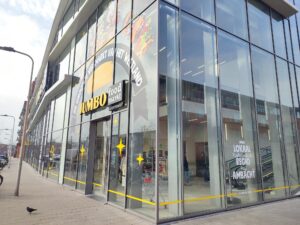
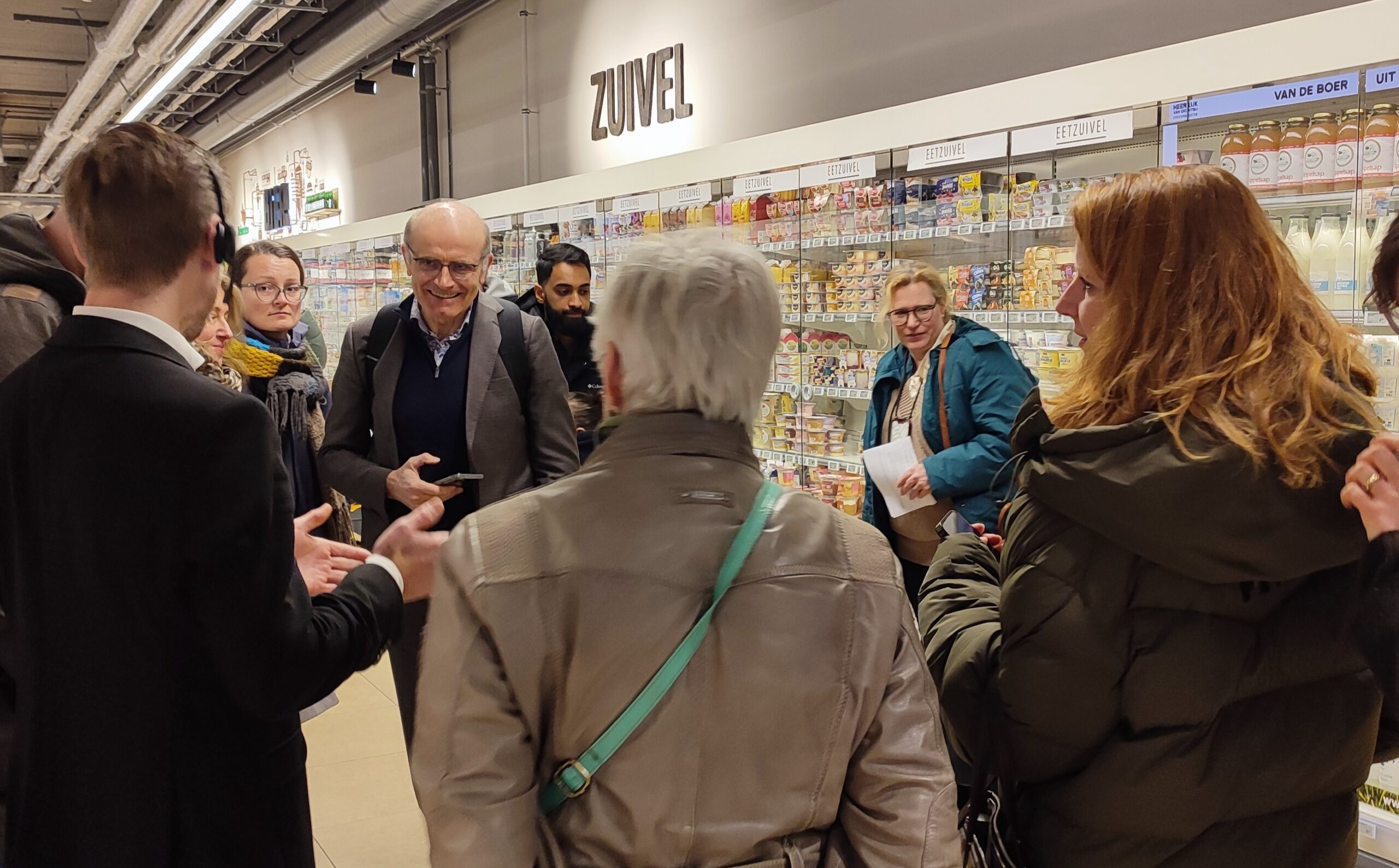
At the beginning of February 2026, participants of the Dutch advisory network focused on short food chains came together and zoomed in on retail. It all started with a visit to supermarket Jumbo Koornneef in Naaldwijk. This is one of the eight branches with regional products from the Heerlijk van Dichtbij cooperative in its range. The activity started in the autumn of 2025, after five years of orientation and preparation. The cooperative’s account manager has a background in retail, bringing valuable retail expertise that supports smooth cooperation with the supermarket.
The products are displayed in two sections (cheese and dairy/juice). The in-store marketing – featuring large circular floor signs and grass-style shelf edging – creates a distinctive rural look and feel. Jumbo Koornneef also works with several of its own local suppliers, each with a different ordering system. To ensure proper stock management, clear in-store responsibility (“ownership”) is essential.
The cooperative was founded in 2020 with 12 farmers and growers, who can guarantee sufficient volume and quality. With a financial contribution from a regional scheme, it was possible to place separate refrigerated display cases in stores in order to run a certain trial period. In addition to supplying products to various supermarkets, farm shops and specialty shops are also customers.
At the end of the meeting, participants engaged in an in-depth discussion with the founder of Quista Solutions, a software application that enables supermarkets to easily source products from small-scale suppliers such as farmers. It was agreed that establishing the right connections and collaborations will be essential to scaling up.
COREnet project
The program was organized by Jan Willem van der Schans and Mariska van Koulil from the Short Chain Taskforce. It is part of the European project COREnet, which aims to improve the advisory network on short food chains. The project includes the development of an advisory guide to help advisors support short food chain concepts. Retail is identified as a key sales channel.
Besides A-brands and private labels, the guide highlights the “fancy label” category, which offers opportunities to introduce locally produced products and compete with established brands. The STREEK label of Groene Hart Coöperatie is an example. It has been a house brand of Hoogvliet supermarkets for decades with 70 stores and online sales, but owned by the cooperative. This is one of the so-called Golden Cases that are highlighted within the project to learn from.
From pioneering to maturity
The meeting was highly relevant in light of recent developments. Unfortunately, several well-regarded short food chain suppliers in the Netherlands have recently gone bankrupt: Rechtstreex, de Lokalist and De Streekboer, with the last two trying to attemptinmg to restart their activit. The same applies to the national Herenboeren foundation. Several other supporting initiatives have also ceased operations (Salland Zuivel, Zuivelcoöperatie Delflandshof and advertising agency Food Cabinet). On the other hand, there are still plenty of concepts that continue to grow, such as Boerschappen, BEUKK, Van Onze Grond, the many CSAs and the increasingly professional on-farm points of sale.
Several recent publications discuss these developments. Wouter van Teeffelen wrote a reflection on the article in the Dagblad van het Noorden. National newspapers Trouw and NRC made an analysis, and Foodlog provided commentaries. Eloïse van Rijswijk of The Food Directors also gave her insights.
During the COVID-19 pandemic, many consumers turned to local food directly from farmers. However, margins are small, customer numbers are limited, and such chains struggle to compete with supermarkets, especially amid inflation and lower pricing. In the Netherlands’ highly efficient market, success requires more than a good story – it calls for alternative approaches, high-quality products, and convenience.
The trend has generally led to fairer prices for farmers and made sustainable food more mainstream. Supermarkets are increasingly adding regional products, and governments, healthcare institutions, and large companies often require short-chain sourcing in catering tenders. Overall, the short food chain is evolving and organizing differently, necessitating a smart, coordinated follow-up approach.
Picutres credits: Mariska van Koulil