|
Dear subscribers,
As we head into November, EU4Advice is entering its final stretch, with the project closing in September 2027. From the start, we have believed that meaningful change in short food supply chains begins with care: for our farmers, our advisors, our communities and the local food systems that sustain us.
The collaboration with COREnet has been at the heart of this journey.
Together, we have worked to make advisors across Europe feel supported, connected and empowered, and we are grateful that this partnership will give our work a lasting home.
A highlight of recent months were our respective General Assemblies, where partners took stock of our progress and began shaping how our results will continue to serve advisors beyond our projects. The visit to local farms reminded us what short food supply chains are truly about: trust, solidarity and people coming together around the food they grow and eat.
This autumn we also put women’s voices in the spotlight. EU4Advice launched #WomeninSFSC, a new campaign sharing the real stories of producers, advisors and policymakers.
On the COREnet side, the Roadshow closed with an event on rural women for the International Day of Rural Women, and the #RuralWomenVoice video interviews gave a voice to women from Italy, Sweden, the Netherlands and Hungary.
In the months leading up to September 2027, our focus is on consolidating and sharing what we have learned, so that our tools, knowledge and relationships remain open and useful for the advisors who need them.
We hope you enjoy this edition.
Patricia Mora
Project Coordinator, EU4Advice |
| |
|
EU4Advice and COREnet news
|
| |
 |
|
|
|
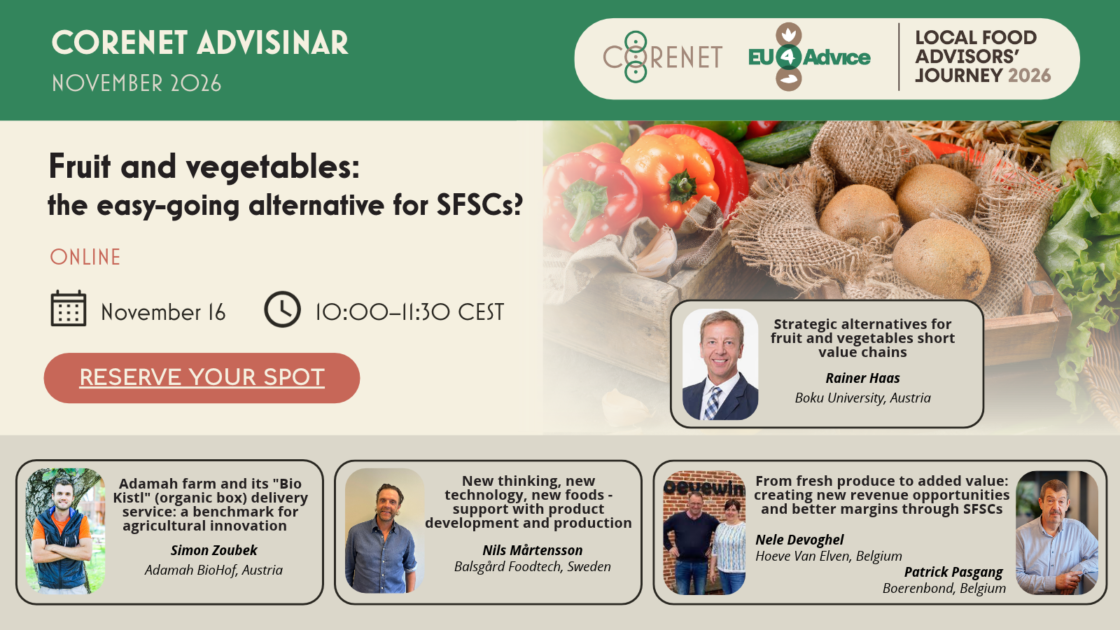
Our latest Advisinar took place on Monday 16 November and focused on “Fruit and vegetables – the easy-going alternative for SFSCs?”.
Advisors, experts and practitioners shared ideas and experiences on strategic alternatives for fruit and vegetable short value chains, with examples from Austria, Sweden and Belgium. |
|
|
| |
In case you missed it: the October Advisinar now on YouTube |
| |
|
How do producer groups organise collective marketing in Short Food Supply Chains, and how can advisors help? Our October Advisinar “Governance Models for Collective Marketing in Short Food Supply Chains” explored it through practical examples, with translated subtitles for the first time.
Couldn’t join us live? You can now watch the full session on the EU4Advice YouTube channel. |
| |
Speaking every advisor’s language |
| |
|
The "Governance Models for Collective Marketing in Short Food Supply Chains” Advisinar was also a step towards a more multilingual network.
For the first time, live translated subtitles let participants follow the discussion in their own language. This builds on the Translation Tools Guide, a practical reference for SFSC advisors produced by EU4Advice and COREnet.
Available in all 24 official EU languages, the guide brings together reliable, mostly free tools to translate websites, emails, documents and videos.
It also provides step-by-step instructions, the limits of each free version and advice on privacy. |
| |
|
Launched in July 2026 by EU4Advice and COREnet, AdvisiNews is the monthly news review for the “SFSC advisory network”, bringing together the latest updates, events and resources for advisors in short food supply chains. It complements the Advisinars, monthly webinars designed by advisors for advisors, and the wide collection of resources in the Advisors’ Corner.
Are you an SFSC advisor?
It also provides step-by-step instructions, the limits of each free version and advice on privacy. |
| |
 |
|
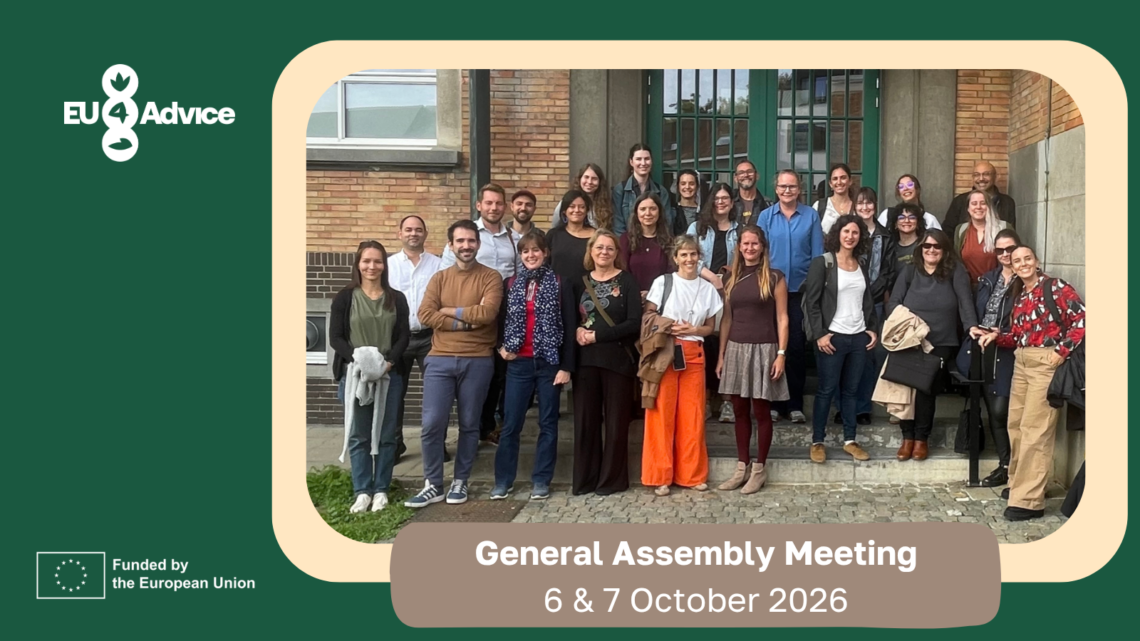
EU4Advice 5th General Assembly in Ghent |
|
On October 6-7, the EU4Advice project partners gathered in Ghent, Belgium, for its 5th General Assembly. The first day featured progress updates and interactive workshops, concluding with a boat cruise along the city’s canals. On the second day, they moved from the classrooms of the Ghent University to the field (literally!) through a visit to “De Goedinge”, an organic community-supported agriculture farm, and a presentation by Agro-ecologie en Biologische Landbouw Living Lab showing a successful Flemish SFSC living lab model. |
|
|
| |
 |
|
EU4Advice Featured on EPALE |
|
EU4Advice has been featured on EPALE, the Electronic Platform for Adult Learning in Europe, with the article named “Building a Stronger European Network for Short Food Supply Chains”. It shows how the project connects SFSC advisors, farmers, policymakers and researchers across Europe through dedicated networks. It also describes the monthly learning opportunities for advisors, Advisinars and AdvisiNews, run with sister project COREnet, and the impact of the project’s Living Labs in Spain, the Netherlands, Ireland and Hungary, where solutions are tested on the ground. |
|
|
| |
|
#WomeninSFSC: a new EU4Advice campaign |
|
EU4Advice is launching Women in SFSC, a new campaign that brings women’s stories to light. Behind every short food supply chain there is work that rarely makes the headlines, and often it is done by women. Producers, advisors and policymakers will share real experiences, challenges, decisions and advice, in their own words. |
|
|
| |
|
Finally, the EU4Advice Training Programme for SFSC advisors is coming soon: eight modules, three learning levels and a flexible online format. Stay tuned! |
| |
 |
|
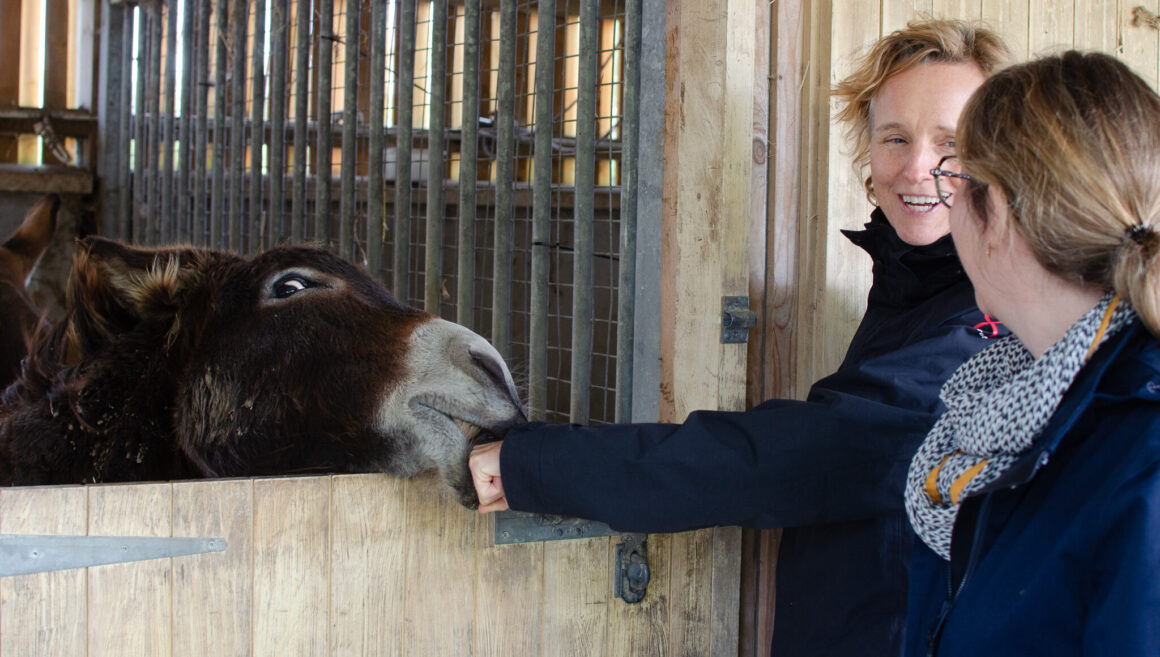
Women, land and food: COREnet European Roadshow explores Ireland’s short food supply chains |
|
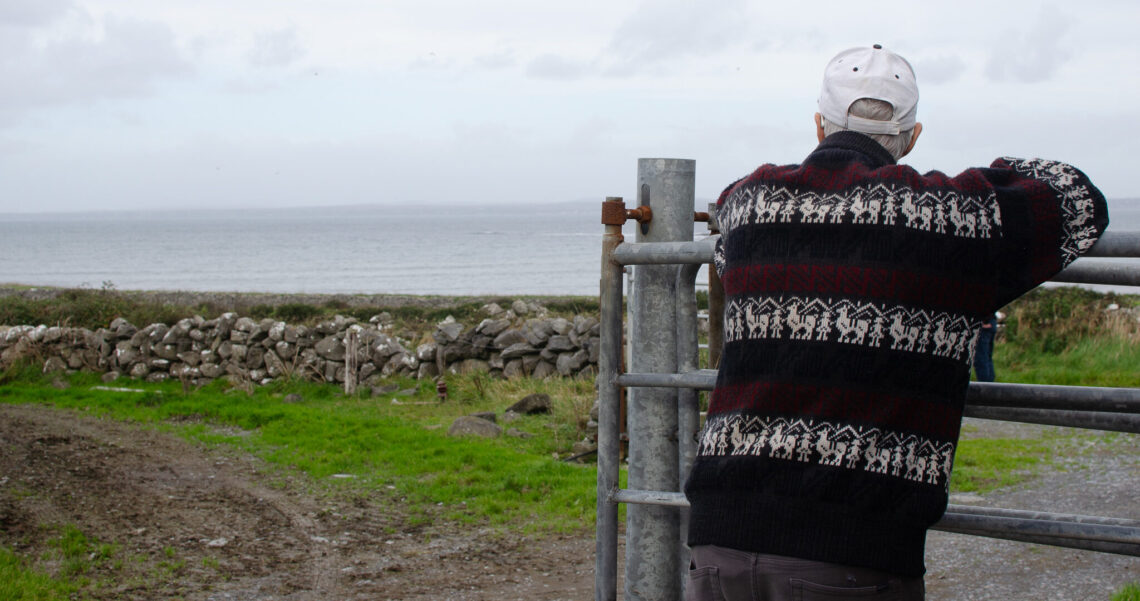
From 13 to 16 October, COREnet partners travelled across Ireland for the latest stop of the COREnet European Roadshow, hosted by Teagasc.
The journey started at Airfield Estate in Dublin and continued along the Atlantic coast to the Burren, with visits to Café Linnalla and the Burren Beef and Farm Experience, where organic farming goes hand in hand with protecting the region’s unique habitats. Partners also met at the BIA Innovator Campus in Athenry for the project’s General Assembly, and visited Masterchefs’ Ellan Farm, where a catering company grows its own organic produce for its kitchens.
The Roadshow ended with “Land Citizenship: Rural Women Cultivating Good Food for All”, an official event of Ireland’s EU Council Presidency celebrating the International Day of Rural Women. |
|
|
| |
 |
|
#RuralWomenVoice: COREnet gives a voice to women in rural communities across Europe |
|
For the International Day of Rural Women on 15 October, COREnet joined the #RuralWomenVoice campaign. Through video interviews, women from Italy, Sweden, the Netherlands and Hungary shared what it means to farm, run a business and build community in rural areas today, and what still holds them back. |
|
|
| |
 |
|
Smart is not enough: rethinking tech for small-scale farming |
|
Can digital tools really help small producers? COREnet's latest article explores why technology works best when it solves the right problem. Through the experiences of Plant on demand, Entretantos and Valle y Vega, it shows that small farms often need simple tools for orders, invoices and payments, and that advisors play a key role in understanding how a business works before recommending any technology. |
|
|
| |
|
SFS Innovation Platform News
|
| |
 |
|
EU Advisory Networks: Collaborating for Resilient & Sustainable Food Systems |
|
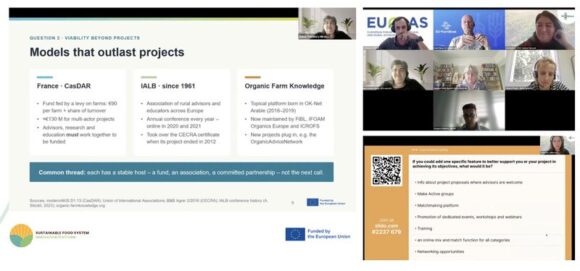
On 30 October, the annual members’ event of the SFS Innovation Platform, managed by the EU-funded projects EU4Advice and COREnet, brought together 83 attendees to explore how advisors can work together for more resilient food systems.
Elena-Teodora Miron (modernAKIS) opened with a keynote on advisory networks as the “nervous system” of a resilient Agricultural Knowledge and Innovation Systems (AKIS).
A panel followed where six EU advisory networks then shared their experience: NBSOIL, AdvisoryNetPEST, the SFSC advisory network, the Organic Advice Network, EU-FarmBook and EUFRAS.
The main conclusion was that what advisors lack today is not information, but time, so networks must respect that time and bring real value to their daily work with farmers. |
|
|
| |
 |
|
Funded by the European Union. Views and opinions expressed are however those of the author(s) only and do not necessarily reflect those of the European Union or REA. Neither the European Union nor the granting authority can be held responsible for them. |
|
|
|
|
| |
|


